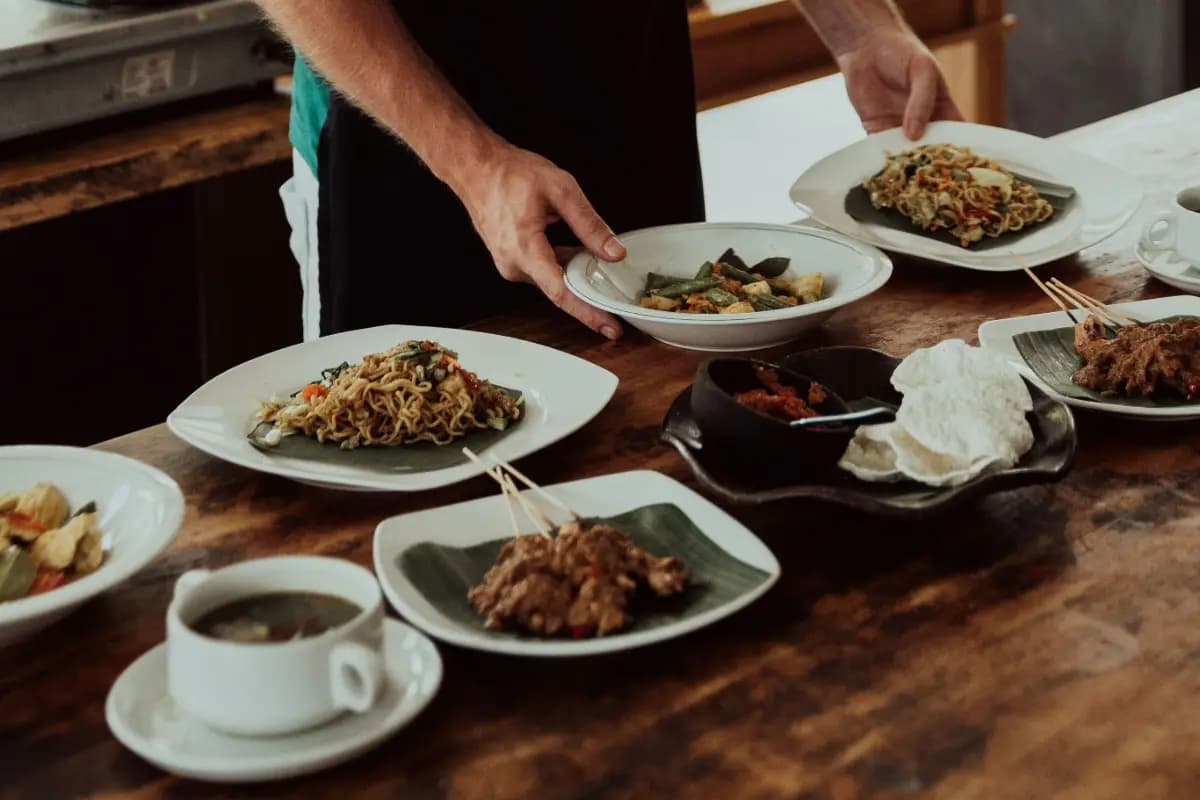
Wondering what to eat in Bali? You should be aware that Indonesia has several spice-rich foods, especially those from Dewata Island. It offers you tons of dishes so that you can taste a variety of local dishes.
These local dishes help you experience an exceptional culinary journey. Below, you will find an in-depth look at what to eat in Bali, so you can discover many dishes with local spices that bring a new taste to your senses.
What a Full Balinese Meal Actually Looks Like
Coming to Bali as a tourist may make you wonder what Balinese food looks like. You may not be familiar with local foods, as the island has a variety of dishes ranging from rich in spices to modest.
A full Balinese Meal is typically made with basa genep, fifteen primary spices. This makes Bali’s traditional food have a complex taste, pampering your tongue with an unforgettable taste in one bite
In addition to basa genep, Balinese cuisine is freshly made with chili, which gives each meal a unique degree of spice. So, it is important to know how spicy Balinese food is, especially for you who are not familiar with it.
How Spicy Is Bali Food, Really?
Bali’s local food can be spicy, but it is not always as extreme as many travelers expect. The level depends heavily on the dish, where you eat, and whether you are having dinner at a local warung or a restaurant.
Here is the spicy level that you can generally expect:
- Mild: Nasi goreng, mie goreng, satay, grilled food, and many soups are often only lightly seasoned with chili or served with sambal on the side.
- Medium: Ayam betutu or bebek betutu may contain quite a great amount of chili, giving a gentle warmth rather than an intense burn.
- Very Spicy: Traditional sambals, such as sambal matah or sambal embe, are made with plenty of fresh chillies. Local warungs usually serve sambals to give extra taste to the dishes.
For this spicy degree, you should choose the right dishes to avoid getting burnt on your tongue. There are several Balinese dishes everyone recommends and the justification for sampling them.
The Balinese Dishes Everyone Recommends, and Why They Are Worth It
You may have found Indonesian food in Bali or even the local dishes. You just need to choose one that matches your taste and preferences. It enables you to have a more sophisticated dining experience when visiting Bali.
Babi Guling, Bali’s Ceremonial Roast Pork
Babi guling is a must-try food in Bali. It is often served during Bali’s ceremonies. It blends base genep, as the spice mixture is rubbed both inside and outside the pig before it is slow-roasted for several hours.
Your plate may feature tender roasted meat, shredded pork, crispy pork skin, spicy pork sausage (urutan), and pork crackling. It is worth trying because in one bite, you can taste all the condiments immediately stimulate your sense of taste.
Nasi Campur, the Everyday Plate That Changes Every Time
Nasi Campur is a Balinese food to try for an exceptional culinary experience. A plate may feature grilled chicken, shredded pork, satay, fried egg, tempeh, tofu, vegetables, sambal, and lawar. Instead of one speciality, you can sample several local dishes in a single meal.l.
Sate Lilit and the Art of Balinese Satay
If you want to try another type of satay, you can choose Sate Lilit. It has become the art of Balinese satay. Unlike many Indonesian satays that are served with peanut sauce, sate lilit is flavorful enough to stand on its own.
The satay is usually served with rice, vegetables, and sambals, or even served on a nasi campur platter. It is one of the flavorful Balinese dishes that capture the essence of Balinese cooking, featuring a tender texture and smoky aroma.
Bebek Betutu and Ayam Betutu, Bali’s Slow Cooked Classics
Bebek Betutu and Ayam Betutu are traditional Balinese dishes to try during your trip. The traditional version may be quite spicy because chilies are blended directly into the seasoning. However, you must eat these dishes since they provide your taste receptors with a delightful flavour.
Lawar, Sambal Matah, and the Bold Flavors Behind Balinese Cooking
Do you want to try bold-flavored dishes on Dewata Island? You have to try Lawar or Sambal Matah. They are a must-eat food in Bali because they offer a taste you can never find anywhere. The spices are blended perfectly, leaving you with an unforgettable taste that lingers in your mouth.
Eating Bali by Occasion, Not Just by Dish
Enjoying the best food in Bali is not limited to the dishes. You have to consider the occasion to elevate your dining experience. From breakfast to a proper lunch and unforgettable dinner, Balinese dishes are made to fulfill your hunger with flavorful spices.
What to Eat for Breakfast in Bali
To start your day, you can have the modest Balinese dishes. Locals usually eat nasi campur in the morning for breakfast. It fills you with energy, so you can consider experiencing it, as you will feel the local vibes on your trip.
What to Eat on a Budget, Warung by Warung
For budget-friendly dishes, you can eat in Bali warungs. You have a wide variety of meal options at these warungs. You just have to choose the menu based on your preferences, ranging from pork-based condiments to chicken and vegetables. Choosing two or three dishes is already enough to fill you up.
What to Eat for a Special Occasion or Romantic Dinner
Traditional Balinese cuisine can be served in the elegant dining room. Restaurants often reinterpret local classics such as bebek betutu, sate lilit, or seafood with base genep. They present them with refined plating while preserving their authentic flavors, so you can still experience upscale dining with local dishes.
Where You Eat Changes What You Should Order
For a better experience, you should try local warungs. They serve you Balinese specialties. You can order nasi campur, babi guling, ayam betutu, or sate lilit. These family-run eateries often prepare recipes passed down through generations, so the taste is still authentic.
In addition to warungs, you can also visit fine-dining restaurants. Balinese dishes are made freshly with locally sourced ingredients, crafted into more elevated. It gives traditional Balinese flavors with a contemporary presentation.
Eating Around Bali, Region by Region
Each region in Dewata Island has its own speciality in serving traditional dishes. From Bali street food to complete meals on one plate, there are options available for you to taste. So, you can visit several places to enrich your culinary journey.
Ubud’s Healthy Cafes and Traditional Warungs
Ubud is a region where you can find vegetarian food in Bali. Many restaurants serve dishes with ingredients sourced from local farmers. You can taste the food’s freshness, complemented by the cool breeze and rustling leaves. It is what makes Ubud a special place for culinary.
Canggu’s Fusion and Health-Conscious Scene
Following the Bali food guide will bring you to Canggu’s best restaurants. Menus often combine Indonesian ingredients with Japanese, Mediterranean, Mexican, or even Middle Eastern and European influences.
You can also find a health-conscious scene that emphasizes organic vegetables, locally sourced ingredients, sustainable seafood, and plant-based cooking. This makes Canggu a famous area for travelers.
Seminyak and Kuta’s Restaurant Density
With stylish decoration, you can find modern Indonesian cuisine in Seminyak Restaurants. Many eateries also emphasize ingredients from local farmers and beautifully presented dishes. This makes Seminyak a popular destination for romantic dinners and special celebrations.
South of Seminyak, Kuta offers a more relaxed and budget-friendly dining atmosphere. The area features everything from local warungs to Indonesian eateries. It’s a casual dining establishment in Bali, offering big portions and reasonable costs.
Sanur and Uluwatu’s Quieter, Local Pace
Sanur and Uluwatu are quieter areas where you can enjoy dining more calmly. With breathtaking views, these two places offer you local dishes. These are thoughtfully made with local ingredients, leaving you with a truly authentic taste that transforms into a core memory.
Bali’s International Dining Scene Is Part of What to Eat Here Too
Popular destinations such as Ubud, Seminyak, Canggu, Uluwatu, and Sanur are home to restaurants specializing in Western and Asian cuisine. Many restaurants are led by internationally trained chefs, combining authentic cooking techniques with high-quality locally sourced ingredients.
Easy access to fresh tropical produce allows chefs to use premium seafood, meats, herbs, and spices. Many chefs incorporate Balinese ingredients into international recipes, creating dishes that feel both familiar and uniquely local. It is what makes Bali’s international dining scene popular among tourists.
Eating With Dietary Needs: Halal, Vegetarian, and Vegan in Bali
Even though the majority of locals are Hindu and pork is commonly used in traditional Balinese cuisine, halal food in Bali is widely available. Indonesian restaurants, Padang eateries, and seafood restaurants serve halal-friendly meals, often featuring chicken, beef, lamb, and seafood.
A trip to Bali can satisfy dietary requirements, such as plant-based food for vegetarians and vegans. Many restaurants in Ubud and Canggu have dedicated vegan eateries, ranging from vegan burgers and tacos to smoothie bowls. You can try to order them.
Food Safety, Etiquette, and Practical Tips Before You Eat
Following practical tips before you eat is important. It is a part where you can experience an appropriate dining scene during the trip, so you won’t ruin the moment of enjoying dishes. Here are tips to follow:
- Choose busy and reputable restaurants: Places with a steady flow of customers are often a good sign of fresh ingredients and regular food preparation, helping you avoid Bali belly
- Drink safe water: Never drink tap water in Bali. Stick to bottled water or filtered water provided by reputable hotels, restaurants, and cafes.
- Be mindful of spice levels: If you are sensitive to the heat of chillies, you can ask “tidak pedas” (not spicy) or request sambal on the side so you can adjust the spice level to your preference.
- Wash your hands: Some local dishes may be eaten by hand. So, washing your hands is important for good hygiene.
- Respect dining customs: Saying “terima kasih” (thank you) after your meal is a simple gesture to respect local culture in Bali.
From Local Flavours to Memorable Bali Dining Experiences
Planning a trip to Dewata Island will answer the question of what to eat in Bali. It is an island where you can enjoy a variety of menus, from local flavours to refined food tastes in the best dining experience.
You can find and read an article on The Wonderspace if you’re looking for advice on how to eat Balinese food. To ensure you have a memorable dining experience while travelling, we are prepared to assist you in selecting from the top local to upscale eateries.