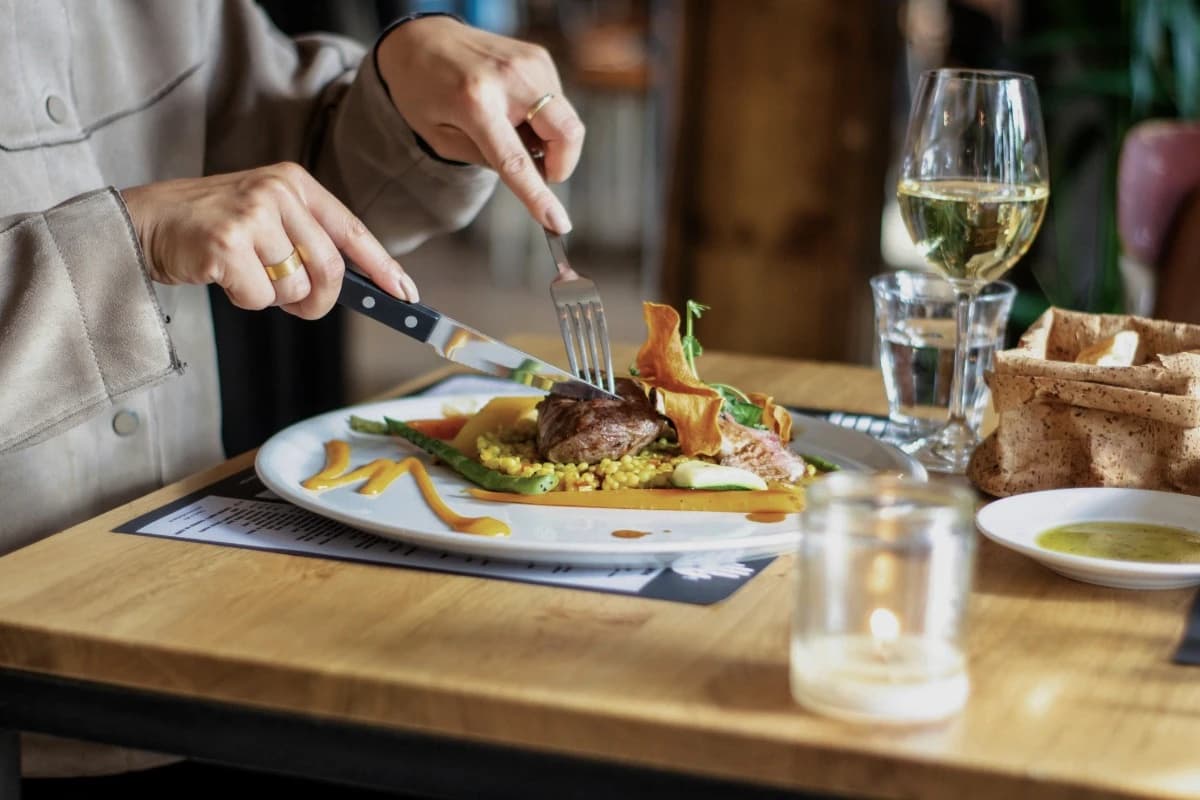
Fine dining etiquette is a set of manners that guests follow at a luxury or formal restaurant. It keeps the experience elegant and shows consideration for other diners and the staff, covering things like dress code, cutlery use, booking, and tipping.
These manners apply whenever you visit a fine dining restaurant, and Bali is no exception, though each venue sets its own rules. This article explains each one, from dress code to tipping, so you can feel confident at the table.
What is Fine Dining Etiquette?
Fine dining etiquette is a simple code of good manners for eating at a formal restaurant, especially an upscale one. It tells guests how to dress, sit, eat, and talk to the staff so everyone enjoys the meal.
The customs began with European banquets and are now followed around the world. Many of them are everyday good manners, but they are practiced most fully at fine dining venues.
The goal is easy to remember: make the meal calm, pleasant, and comfortable for all guests. It covers dress code, reservations, napkin use, cutlery use, ordering, and tipping.
Table manners stay the same almost everywhere. Only the dress code, reservation policy, and tipping practice can change from one venue to another.
Fine Dining Dress Code in Bali, Area by Area
Bali has fine dining spots tucked into every corner of the island, and each area brings its own personality. Most welcome a smart casual look, but with such different landscapes, from the lush, green setting of Ubud to the breezy cliffs of Uluwatu, it pays to choose your outfit with a little extra thought.
Ubud
Fine dining in Ubud, Bali, is a peaceful experience, wrapped in rice fields and tropical forest. Linen shirts, light tops, and neat trousers or skirts all suit the calm, natural mood.
Some paths here are rustic and uneven, so closed shoes or tidy flat sandals are the comfortable choice. Evenings can feel cooler than the day, so a light shawl or jacket is a handy thing to carry.
Seminyak and Canggu
If you are planning fine dining in Seminyak, expect a fashion-forward crowd, where a polished look fits most restaurants. Pair a collared top or a flowy blouse with tailored trousers or a skirt, then finish with good shoes.
Canggu feels more relaxed, and many of its fine dining spots lean smart casual. Keep the beachwear for the sand and step it up a little for dinner.
Uluwatu and Sanur
Uluwatu is famous for its cliffside restaurants, where the sea breeze can blow strongly. Choose an elegant outfit that stays in place, and bring a light layer for the evening.
Sanur is quieter and more laid-back, with many restaurants set inside resorts. Neat smart casual wear is usually enough for a comfortable night out.
What Does Not Work Anywhere
Swimwear, wet clothes, gym wear, and ripped or overly casual outfits do not fit the mood of a fine dining room. It is best to leave them at your hotel.
Sleeveless tops and plain flip-flops are also turned away at some high-end venues. Check the restaurant’s dress code before you go, so you feel at ease whatever the setting.
How to Book a Fine Dining Table in Bali
Most fine dining restaurants in Bali require a reservation in advance and do not accept walk-ins. Booking early also gives you a smoother evening and a better chance at a table, especially in busy areas, during the holiday season, or at a favorite spot. Here are the key things to know before you book a table for fine dining on the island:
- Choose your area first: Each area has its own mood, so decide whether you want Ubud, Seminyak, Canggu, Uluwatu, Nusa Dua, or somewhere else. Then pick a date that suits the season and the crowd.
- Pick a booking channel: Most venues take a reservation through their website, a booking link, WhatsApp, email, or phone. Use the channel listed on the restaurant’s official page, since it is the most reliable way to get a confirmed table.
- Share the right details: Mention the date, time, number of guests, and any special occasion you are celebrating. You can also ask for a preferred seating spot, such as a view, and check the seating time, because some venues give each table a set dining window.
- Ask about dietary needs: Let the restaurant know about allergies or dietary preferences early, and ask which options or set menu choices can suit them. This gives the kitchen time to prepare.
- Understand the policies: Policies on deposits, rescheduling, cancellations, full prepayment, and minimum spend differ from one place to another. Ask about each one before you confirm, so there is no confusion later, and check whether a set menu is required.
- Confirm and arrive on time: After booking, wait for the confirmation message or email and keep it safe. If your plans change, tell the restaurant as soon as you can, and on the day, arrive a few minutes early so you can settle in without rushing.
How Courses Work: Tasting Menus, Pairings and Pace
Unlike a casual restaurant where you order dishes one by one, many fine dining venues serve a tasting menu, also called a degustation menu. The kitchen sets the menu for you, from the first bite to dessert, in small portions served at a gentle pace.
Think of it as reading a story on a plate. Each dish introduces a new flavor, texture, or cooking technique from the chef, so the fine dining courses build toward a full picture of the kitchen’s style.
Many restaurants also offer a wine pairing, where drinks are chosen to match each dish. A sommelier, the restaurant’s wine specialist, can guide you, and cocktails or non-alcoholic drinks are often available too.
A tasting menu moves slowly, and the meal can last two to three hours. The relaxed pace means you can enjoy each plate and chat with your companion without rushing.
Even though the tasting menu is the most common format, not every fine dining venue runs things the same way. Some serve omakase, a chef-led meal where the chef decides each dish, and others let you order à la carte.
Cutlery and Table Manners Without the Stress
Many people think table manners and cutlery rules at a fine dining dinner are complicated and a little scary. In reality, they are much easier than they look.
Order of Using Your Cutlery
The basic rule is simple, cutlery is laid out from the outside in. Start with the outermost pieces for the first course, then work your way inward as each new dish arrives.
Forks usually sit on the left side of the plate, while knives and spoons sit on the right. This layout makes it easy to know what to pick up next.
The pieces placed above the plate are usually for dessert. If you ever feel unsure, glance at the other guests or ask the staff, which is completely normal and nothing to be shy about.
How to Hold Your Cutlery and Signal a Pause
Hold your fork and knife comfortably, without stiffness. When you stop for a sip of your drink or a chat with your companion, rest them on the plate in a crossed position or an inverted V.
Once you have finished, place your knife and fork side by side on the plate, pointing toward the four or five o’clock position. This quietly lets the staff know they can clear your plate.
Napkin Use and Table Posture
Place your napkin on your lap after you sit down, and use it to dab your mouth gently. If you need to leave the table for a moment, rest it on your chair or beside your plate, then return it to the table when the meal is over.
Sit upright and keep your elbows off the table while you eat. Take your time, chew with your mouth closed, and keep your phone tucked away or on silent so you can enjoy the moment.
Dietary Requests and Allergies
Because most fine dining restaurants serve a set menu, it is worth checking that the dishes suit your dietary needs or allergies before you go. Many kitchens can adjust a dish to fit your needs, and some offer vegetarian, vegan, or halal options.
To make sure it works, tell the restaurant team when you make your reservation. These adjustments cannot always be made on the spot, so give the kitchen plenty of notice and let them prepare your meal with care.
Service Charge, Tax and Tipping in Bali
When you look at the menu, you may notice a “++” sign beside the prices. It means tax and service charge will be added to the bill, so the listed price is not the final amount you pay.
Since a service charge is already part of the bill, tipping in Bali is usually optional. You are never required to leave one, but if you enjoyed the service and want to show your thanks, a small tip for the team is always appreciated, and it helps to ask about the restaurant’s tipping policy first.
Fine Dining Formats at The Wonderspace
The Wonderspace is home to several upscale restaurants, including Riserva Ubud and Kojin Bali for fine dining, and Tsune for a more relaxed take on elevated Japanese dining. What makes it interesting is that you will not find just one format here, since each venue has its own specialty and mood.
Riserva Ubud is a steakhouse known for premium cuts, fine wines, and an evening told in seven chapters with Balinese-inspired rituals. It offers an à la carte option alongside its set menu, and the setting is calm and intimate, with views of forest and rice fields.
Kojin Bali specializes in Japanese teppanyaki and omakase, including a Chef’s Table with a multi-course tasting menu created by an experienced chef. Its wood-lined interior and earthy tones create a serene, zen-like atmosphere, with valley views just beyond the table.
Tsune brings refined Japanese dishes to the table, along with a signature floating sushi boat. Its semi-outdoor, rooftop setting in Sanur gives it a relaxed and romantic mood, with sea views to match.
Good Etiquette Is Mostly Attention
Understanding fine dining etiquette is not hard, because the rules are simple and easy to follow. Visiting a formal or upscale restaurant does not have to feel intimidating either, as long as you know the basics and stay mindful of them.
To discover more about food culture and dining etiquette, visit The Wonderspace blog for more insight.