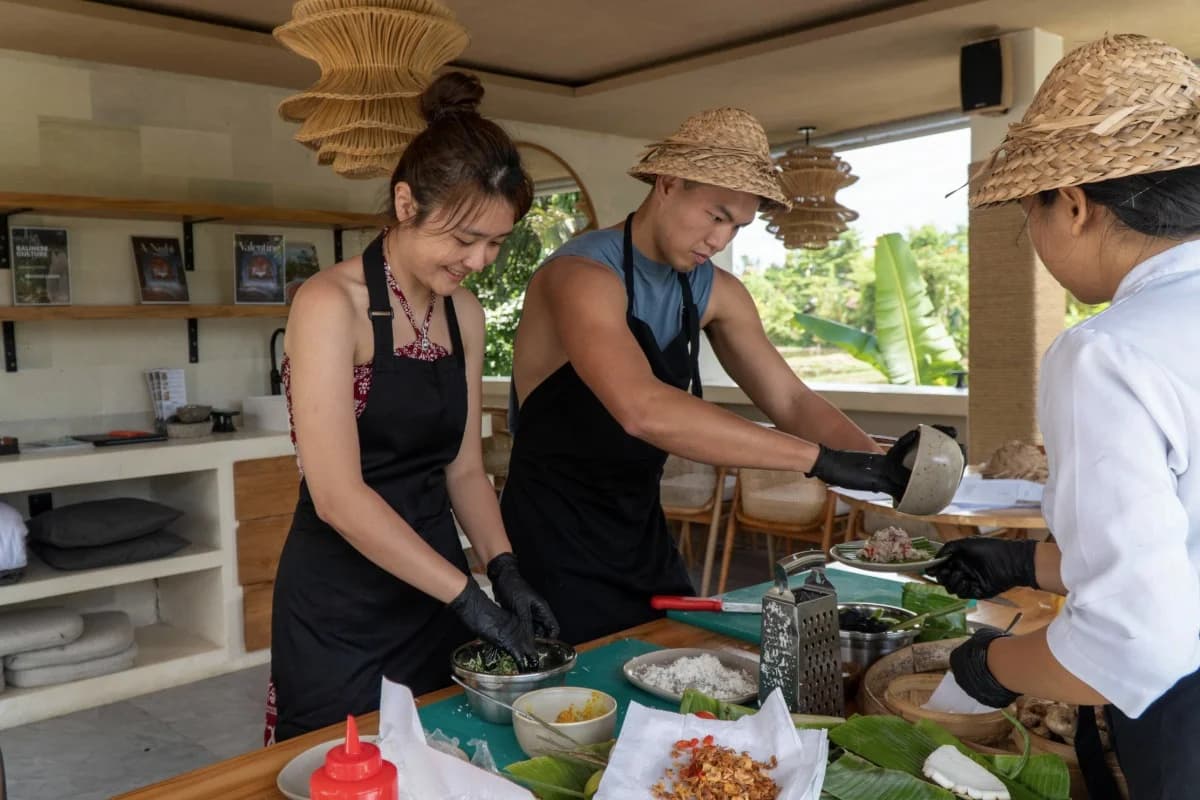
A cooking class in Bali is one of the most rewarding ways to get to know this island through its rich culinary heritage. This tropical paradise isn’t just about beach days and nightlife; cooking alongside locals adds a whole new layer of meaning to your trip.
Bali’s cooking classes offer an experience unlike your typical cooking class back home. If you’re keen to learn traditional Balinese dishes and explore the island through its food, this guide has everything you need.
What to Expect from a Bali Cooking Class
Who would’ve thought a cooking class would make it onto your Bali itinerary? Most people tend to think of beach clubs, sunset views, or nightlife when planning their trip. But for those craving something different and wanting to dive deeper into the island’s culinary richness, a cooking class is an off-the-beaten-path activity well worth trying.
So, is a cooking class here like any other cooking class you’ve done before? Not quite. These classes typically run for 3 to 5 hours and include a trip to a traditional market, picking fresh ingredients straight from an organic garden, an introduction to local spices, making base genep from scratch, and hands-on practice cooking authentic Balinese dishes before sitting down to enjoy the meal together.
It’s genuinely a fun experience and one that could turn into a memory you won’t easily forget. Even better, the skills you pick up can be brought straight back home, so whenever you’re missing Bali, you can whip up the dishes you learned to cure that craving.
Types of Classes and Choosing Your Zone
Cooking classes in Bali come in quite a range, from traditional village compounds to luxury organic farms and beachside villas, all of which can be tailored to your travel style. These classes are also easy to find across several areas in Bali, so you can pick a zone that fits wherever you’re staying or exploring.
Types of Cooking Classes
- Traditional Village & Family Compound: Cook alongside a local family right inside a traditional home, learning ancient Balinese techniques like grinding spices with a stone mortar.
- Farm-to-Table Organic: Harvest your own herbs and vegetables straight from an organic garden before cooking with fresh, natural ingredients.
- Luxury Resort Workshops: Learn to cook comfortably in an upscale, air-conditioned setting for a more exclusive experience.
- In-Villa Private Tutors: Invite a professional chef straight to your kitchen to learn a specific menu without ever leaving your accommodation.
Choosing Your Zone in Bali
- Ubud: Home to plenty of cooking class options, ideal for immersive farm tours set against a jungle backdrop, traditional villages, and morning market visits.
- Canggu & Seminyak: A better fit if you’re after convenience, with quick coastal classes or private lessons right inside your rented villa if you’re staying in the area.
- Nusa Dua & Jimbaran: Great for more upscale coastal workshops, often offered by hotels or resorts running their own cooking class programs.
What You Will Actually Learn to Cook
A Balinese cooking experience is both fun and meaningful, giving you a closer look at the island’s culinary traditions.
During the class, you will learn how to recognize local spices, prepare traditional spice pastes, cook authentic Balinese dishes, and even make traditional sweets for dessert. Some classes also include a visit to a traditional market or an organic garden, where you can see and choose fresh ingredients before cooking.
The main activities in a Balinese cooking class usually include:
- Introduction to Balinese spices: Learn the names, aromas, and uses of traditional spices commonly found in Balinese cuisine.
- Making traditional spice pastes: Learn how to prepare basic Balinese spice pastes, such as white, red, or yellow base genep, which are used as the foundation for many local dishes.
- Hands-on cooking: Prepare around four to five traditional Balinese dishes, such as sate lilit, sambal, and other local favorites.
- Making traditional sweets: Finish the experience by learning how to make a traditional Balinese sweet or snack to enjoy as dessert.
How Much a Class Costs and What Is Included
Cooking class prices in Bali vary quite a bit. Regular group sessions usually cost between IDR 300,000 and IDR 950,000 per person.
Private classes or those hosted at luxury resorts tend to be higher, often between IDR 1,200,000 and IDR 1,500,000. Most sessions last three to five hours, no matter the format.
That price usually covers more than just the lesson itself. Expect fresh ingredients and cooking tools provided by the venue, plus a shared meal once your dishes are ready.
Many classes also include a visit to a traditional market or an organic garden, along with a recipe book and a certificate to take home. Mineral water and snacks are typically provided throughout the experience, and some venues even offer hotel pickup and drop-off.
Matching a Class to Your Travel Style and Itinerary
There are plenty of cooking classes to try across the island, but the right one depends on your trip length, daily budget, and location. Matching these with the class style you choose makes all the difference. Here’s a quick breakdown to help you decide:
- Farm-to-table organic classes: a great fit if you enjoy green fields or an early morning market visit before you start cooking.
- Village homecook workshops: well-suited for anyone drawn to cultural immersion inside a traditional family compound.
- Luxury resort academies: made for food lovers who want to cook in an air-conditioned space with high-end equipment and wine pairings on the side.
- Quick half-day sessions: a solid choice when your schedule is tight but you still want the full experience.
Questions to Ask Before You Confirm a Booking
Don’t rush into booking a cooking class. Make sure to confirm a few things first so your experience fully matches your expectations. Here’s what you should ask:
Class Structure & Menu
- Is a market tour included?
- How many dishes do you make?
- Is the class truly hands-on?
- What is the exact duration?
Logistics & Location
- Is hotel pickup and drop-off free?
- Is the class private or shared?
- Where does it take place?
Dietary & Policies
- Can they handle dietary needs?
- What is the cancellation policy?
- Do they provide a recipe book?
Make sure the class you choose covers everything you’re hoping for. That way, you can enjoy the whole experience even more.
Frequently Asked Questions About Bali Cooking Classes
- Where can I find a Balinese cooking class?
Balinese cooking classes are easy to find across nearly every corner of the island. Ubud is the spot for a more authentic, farm-to-table experience, while Seminyak and Canggu offer a more convenient, modern setting. For chef-led classes inside a luxury resort, Nusa Dua is the place to go. - What are some good cooking classes in Ubud, Bali?
There are plenty of places offering Balinese cooking classes, and one worth trying is Paon Bali Cooking Class in the heart of Ubud. It’s a highly rated, hands-on class where you can learn traditional recipes in a fun setting and get a real feel for an authentic Balinese kitchen. - What do you do in a Bali cooking class?
A typical Balinese cooking class runs about 3 to 5 hours and moves through several stages. It usually starts with an early morning visit to a traditional market or an organic garden to pick fresh ingredients, followed by preparing the base spice paste, basa genep.
From there, you’ll move into the cooking session itself, where you’re guided through making a full set of dishes. The class wraps up with everyone sitting down together to enjoy the meal you’ve made.
What a Cooking Class Leaves You With Once You Are Home
There are many ways to experience Bali, and a cooking class is one of the best. It lets you get to know the island’s rich culture in a different, more hands-on way, through its dishes and the stories behind them.
Cooking turns out to be both rewarding and fun, especially when you’re learning recipes from the very place you’re visiting. Don’t forget to explore more of Bali’s culinary richness through The Wonderspace’s restaurants, including Cantina Ubud, Tsuné Uluwatu, Tsuné Sanur, Norii Ubud, Shichirin Seminyak, Shichirin Canggu, Seabird, Kojin, and Ankhusa.