You may have sampled every viral treat at Bali’s prettiest cafés and bakeries, but have you tried traditional Balinese desserts? They taste worlds apart from trendy pastries, carrying a flavour rooted in centuries of local culinary heritage.
Locally known as jaje Bali, these desserts deserve a spot on your must-try list during your island getaway. The guide below covers every variety worth seeking out, along with where to find them.
What Are Balinese Desserts Actually, and How Do They Differ From Indonesian Jajanan Pasar?
Traditional Balinese desserts, or jaje Bali, cover a wide range of cakes native to the island of the gods, each bursting with flavour, colour and shape. While some resemble Indonesia’s jajanan pasar (traditional market snacks) at first glance, these treats differ in ways shaped by their close ties to local Hindu traditions.
These desserts often appear in religious ceremonies across the island, playing a role that goes beyond taste alone. Local ingredients drive their flavour, including rice flour, coconut milk, and palm sugar.
The Ceremonial Life of Balinese Sweets
Beyond being a treat to savour, traditional Balinese desserts carry a ritual purpose, often placed within ceremonial banten. Serving as a form of yadnya, or sacred offering, these sweets stand as more than food, representing gratitude, devotion, and reverence to Ida Sang Hyang Widhi Wasa (the Balinese Hindu term for God).
These desserts also serve as a means of harmony within the island’s Hindu traditions, weaving spirituality into daily life. Jaje Bali further stands as a symbol of sincerity and gratitude, where its shape, colour, and variety each reflect joy, beauty, and a genuine offering from nature.
The making of jaje Bali follows customs passed down through generations, reflecting spirituality, authenticity, and community cooperation among local Balinese families.
The Three Ingredients That Define Almost Every Balinese Sweet
Traditional Balinese sweets typically use natural ingredients that grow abundantly across the island. Some of the key ingredients include palm sugar, coconut, and rice flour or glutinous rice.
Palm Sugar From Coconut and Lontar Sap
Palm sugar, or gula merah, stands as one of the key ingredients across many Balinese sweets. This brown-hued sweetener comes from coconut, aren palm, or lontar sap, and holds a place as a popular ingredient across Indonesia as a whole.
Its savoury-sweet flavour and distinct caramel aroma make it a natural fit for Balinese cakes. The natural brown colour also lends a beautiful, rustic look to these desserts.
Coconut in Its Four Forms
Alongside palm sugar, coconut appears across many traditional Balinese cakes, lending a natural savoury note, distinct aroma, and soft texture. This ingredient typically comes in several forms, including grated coconut, coconut milk, coconut sugar, and coconut water.
Rice Flour and Glutinous Rice
Rice flour and glutinous rice also stand as key ingredients in Balinese cake-making, suited to the island’s tropical climate and steamed textures. Rice flour offers a firm yet soft structure, keeping wet cakes from turning too dense.
Glutinous rice flour, on the other hand, contains high amylopectin content, giving these cakes their signature chewy, sticky, and rich texture.
How Preparation Method Determines Texture
If you head to a traditional market and sample the desserts there, you’ll notice each cake carries its own distinct texture. This difference usually comes down to the cooking method behind it.
Steamed and Boiled Sweets
Many Balinese cakes rely on steaming and boiling techniques throughout their preparation. Steaming with hot water vapour keeps these cakes soft and helps them hold their shape, while boiling in water or a bubbling palm sugar solution creates a chewier, evenly cooked texture.
Wood Fired and Clay Pot Sweets
Some cakes go through wood-fired and clay pot techniques, cooked over traditional wood-burning stoves and shaped in clay moulds. This method has been passed down through generations, preserving an authentic flavour, chewy texture, and smoky aroma that seeps deep into the batter.
Slow Cooked and Fried Sweets
Balinese cakes also come through two distinct cooking methods. Some, like wajik and jenang, cook slowly over low heat with constant stirring, allowing the ingredients to soak into the batter without burning.
Others, such as kaliadrem and getas, go through frying, a much quicker method that adds a crisp texture and glossy finish to the cake.
How Traditional Balinese Sweets Are Made?
Unlike modern cakes made through baking, traditional Balinese sweets typically come together by hand, using natural local ingredients and more traditional techniques such as steaming, boiling, grilling or frying.
Chewy and Filled Sweets to Try First
Klepon
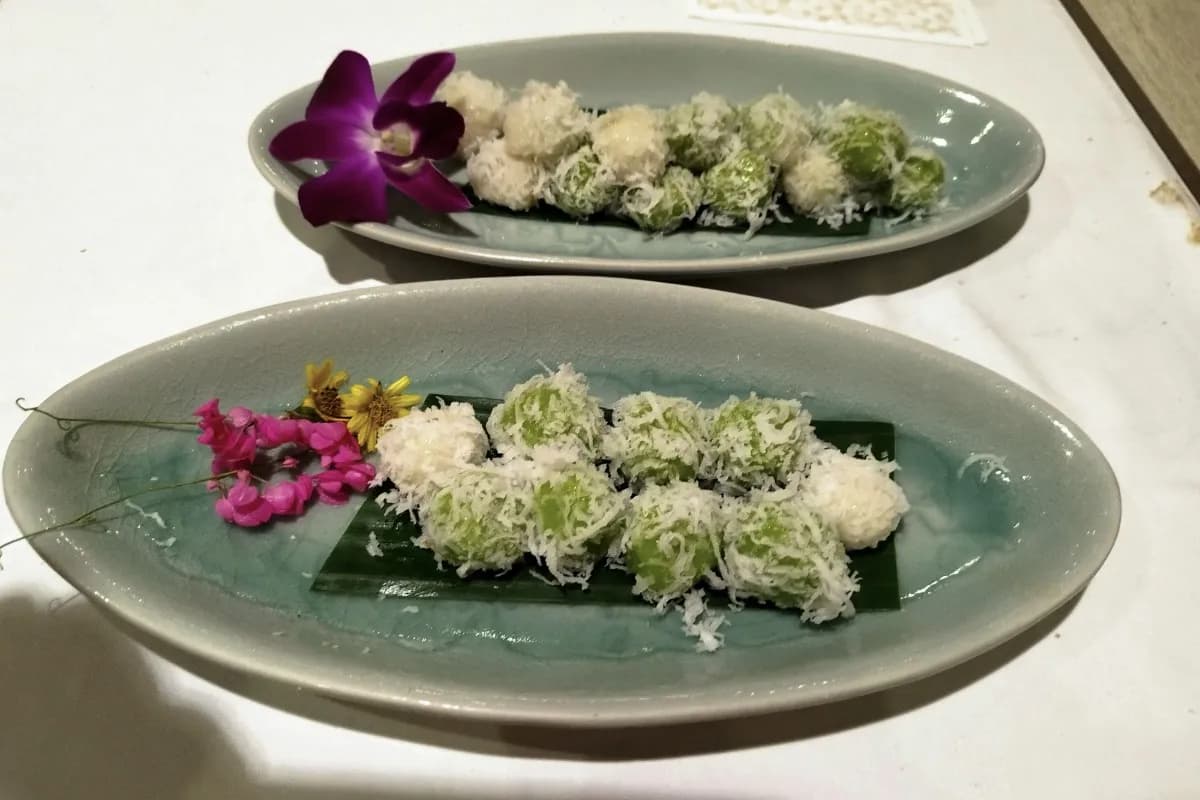
One of Bali’s most popular snacks, klepon takes the shape of small chewy balls made from glutinous rice flour and filled with liquid palm sugar. These are then rolled in grated coconut, adding a savoury hint to balance the sweetness.
When you bite into this treat, molten caramel sweetness bursts straight into your mouth. That playful surprise is exactly why klepon remains a firm favourite among locals and visitors alike.
Cenil
This colourful traditional treat is made from tapioca flour, giving it a distinctly chewy bite. Rolled in grated coconut, it brings a cheerful, eye-catching side to Bali’s snack scene. With its soft, chewy texture, cenil tastes even better when drizzled with warm liquid palm sugar.
Batun Bedil
Shaped like small bullets, batun bedil is a market snack made from glutinous rice flour boiled until fully cooked. It is typically served in warm palm sugar syrup and topped with grated coconut. This treat has a soft texture with a slightly sticky bite.
Jaje Uli
This traditional treat is made from steamed glutinous rice pounded until chewy and dense, much like classic mochi. You can enjoy it fresh, or sliced thinly and fried until crisp on the outside. It pairs especially well with tape ketan, Bali’s fermented glutinous rice, for extra flavour.
Comforting and Spoonable Sweets
Bubur Injin
Bubur injin is a rich porridge made from black glutinous rice, simmered until thick and mildly savoury, then finished with a generous pour of thick coconut milk. Its distinctive purplish black colour and unique flavour make it a favourite choice for breakfast or a comforting snack.
Bubuh Sumsum
Made from fine, pure white rice flour, bubuh sumsum is served warm and drizzled with liquid palm sugar. The savoury porridge pairs beautifully with the sweet syrup, striking a balance that makes it endlessly comforting to eat.
Kolak
Kolak is a sweet soup made from a mix of banana, sweet potato, or jackfruit simmered in coconut milk and palm sugar until tender and fragrant. Traditionally served warm with its rich broth, it makes the perfect treat for a lazy afternoon.
Griddled, Rolled and Wrapped Sweets
Laklak
One of Bali’s most iconic market snacks, laklak resembles a mini serabi with a green hue from suji or pandan leaves, cooked in a clay mould over a wood fire. It is typically served topped with grated coconut and a drizzle of palm sugar.
Jaje Dadar
This thin green crepe is made from wheat flour and rolled around a filling of grated coconut mixed with palm sugar. Every bite reveals a melting sweetness at the centre, while the milder outer layer keeps the whole thing perfectly balanced.
Jaje Bendu
A speciality from Jembrana in West Bali, this cake features a thin rice or glutinous flour skin rolled around a coconut and palm sugar filling called unti. Wrapped in banana leaf to stay fresh, it offers a taste that is sweet, rich, and savoury, carrying the distinct aroma of banana leaf throughout.
Cerorot
Shaped into a cone using a woven coconut leaf mould, cerorot is filled with a mixture of rice flour, palm sugar, and coconut milk before being steamed. Unwrap it, and you will find a chewy texture with a fragrant aroma, best enjoyed while still warm.
Pisang Rai
This traditional treat is made from banana coated in a thin batter of rice and tapioca flour, then boiled until cooked through. It is served rolled in grated coconut with a drizzle of palm sugar sauce, and pairs wonderfully with a cup of coffee.
Baked and Long-Keeping Sweets
Pie Susu
More modern than the rest yet still a classic of the island, pie susu features a thin, crisp pastry shell filled with sweet milk custard, baked until the surface turns golden. This treat has become one of Bali’s most popular souvenirs thanks to its sweet, indulgent flavour.
Dodol Buleleng
This specialty from Buleleng is made from glutinous rice flour, coconut milk, and palm sugar, slow-cooked for hours until it reaches a thick, sticky consistency reminiscent of toffee. Dense and chewy, this treat keeps well over time, making it a perfect choice to bring home as a souvenir.
Cold Sweets for Bali Heat
Es Daluman
This refreshing sweet iced drink is made from natural green grass jelly, combined with coconut milk and palm sugar syrup over shaved ice. It carries a light herbal note that balances out the sweetness, making it the perfect way to cool down under Bali’s blazing sun.
Es Campur
Es campur is a shaved ice dessert loaded with a colourful mix of ingredients such as grass jelly, fruit, and sweet syrup, bringing together a variety of flavours and textures in one bowl. It is a favourite way to cool off and refresh, especially on a hot day in Bali.
How to Choose a Balinese Dessert Based on Taste and Texture
If you’re someone who pays close attention to texture, choosing the right traditional snack really comes down to matching it with your preference. Bali’s traditional treats come in a wonderful range of textures, from chewy and sticky to soft, and even crunchy.
For Chewy and Sticky Textures
If you love that satisfying chewy bite, desserts made from glutinous rice flour are your best pick, as they deliver a denser, stickier texture. Some options worth trying are klepon, cenil, jaje uli, or batun bedil.
For Soft and Steamed Cakes
If you prefer a softer texture that melts straight in your mouth, steamed desserts are the way to go. A few examples to try include bubuh sumsum, cerorot, or laklak.
For Coconut Lovers
If you’re drawn to the savoury aroma and flavour of coconut, desserts made with coconut milk or grated coconut as the main ingredient are right up your alley. Some delicious options include pisang rai, kolak, es daluman, and more.
For Rich Palm Sugar Flavours
If you’re a fan of that rich, caramel-like sweetness, desserts made with palm sugar are a satisfying choice. A few worth trying are dodol Buleleng, jaje bendu, batun bedil, or similar options.
Choosing the Right Sweet for How You Travel
Traditional Balinese snacks can be enjoyed anytime, but the way you spend your holiday on the island can shape which one truly hits the spot. Whether you are wandering through a local market, hunting for souvenirs, or craving something refreshing under the tropical heat, there is a jaje Bali suited to every moment of your trip.
- For a Quick Bite While Exploring: Try practical snacks that are easy to enjoy on the go, such as klepon, jaje dadar, or pisang rai, since they can be eaten straight away without any utensils.
- For a Souvenir to Bring Home: Choose treats that keep well and travel easily, such as pie susu or dodol Buleleng.
- For Beating the Bali Heat: Cool down with refreshing drinks like es daluman and es campur to fight off Bali’s scorching sun.
- For a Cultural or Ceremonial Experience: If you’re drawn to Bali’s culture and traditions, try snacks that often appear in traditional ceremonies, such as jaje bendu, jaje uli, or batun bedil.
When and Where Balinese Desserts Are Traditionally Enjoyed
There is no strict rule about when or where to enjoy Balinese desserts, but they are typically savoured in the morning alongside a cup of coffee or as a light breakfast, or in the lead-up to religious holidays. These treats are commonly found at traditional markets and roadside stalls, and are also served during traditional ceremonies and local celebrations.
Where to Buy Jajanan Pasar Across Bali?
Finding traditional Balinese sweets is easy, as they are sold almost everywhere, particularly at the traditional market closest to where you are staying. Here are a few spots where you can find them:
- Traditional Markets: Head out early to a traditional market such as Pasar Badung, Pasar Kumbasari, or Pasar Ubud, where you will find plenty of vendors selling these treats.
- Roadside Stalls: Many small roadside warungs and stalls also sell jaje Bali.
- Local Cake Shops: Some local cake shops also offer a selection of traditional Balinese sweets. These spots tend to have a more elevated setting, so you can browse and shop at a calmer, more relaxed pace.
Where Traditional Sweets Appear on Restaurant Menus
Beyond traditional markets and warungs, Balinese desserts also find their way onto the menus of several notable restaurants across the island.
- Sirangon Restaurant: Located in South Denpasar, this restaurant serves desserts inspired by Balinese tradition, including kolak gula Bali, a warm stew of banana and sweet potato in palm sugar syrup.
- Room4Dessert: This iconic dessert restaurant in Ubud, helmed by Chef Will Goldfarb, transforms natural Balinese ingredients into edible art. Here, you can taste a next-level version of laklak, alongside Canang Sando, a contemporary dessert creation inspired by canang sari, the daily offerings found across the island.
Practical Notes Before You Go Shopping
There are a few things worth keeping in mind before buying traditional Balinese sweets. Here are some of them:
- Price Range: These sweets typically come at an affordable price, ranging from Rp500 to Rp10,000 per piece, so you can sample several varieties without spending much.
- Best Time to Buy: Visiting a traditional market in the early morning gives you the best chance of finding a full, fresh stock.
- Shelf Life: How long a cake lasts depends on its cooking method. Steamed, wet cakes such as Klepon and Bubuh Sumsum spoil quickly and are best eaten within a day, while dried or slow-cooked options like Dodol Buleleng and Pie Susu can keep for weeks.
- Bringing It Home: If you’re packing these as souvenirs for a long trip or flight, store the longer-lasting varieties in a cooler bag to keep them fresh, and skip anything made with coconut milk or fresh fruit.
Frequently Asked Questions About Balinese Desserts
- What is a famous dessert from Bali?
Among Bali’s many desserts, klepon stands out as one of the most popular. This chewy rice flour ball holds liquid palm sugar at its centre, coated in grated coconut for a savoury finish that gives way to a burst of syrupy sweetness with every bite. - What are some traditional sweets from Bali?
Traditional Balinese sweets, known locally as jaje Bali or jajanan pasar, are commonly found across the island’s traditional markets. Popular varieties include klepon, laklak, pisang rai, cerorot, jaje bendu and jaje dadar, among many others. - What are some traditional Balinese cakes?
Traditional Balinese cakes typically rely on natural local ingredients such as rice flour, glutinous rice flour, coconut, and palm sugar. Popular examples include laklak, klepon, kaliadrem, jaje bendu, bubur injin and bubuh sumsum, among many more. - What are Bali’s most famous snacks?
Pie susu ranks among Bali’s most famous snacks, a custard milk pie known for its rich, sweet flavour. Its pastry shell stays dense and firm, holding a soft custard filling at the centre.
Carrying the Sweetness of Bali Beyond Your Trip
Savouring the island’s culinary richness, including its traditional Balinese desserts, offers one of the most meaningful ways to connect with local tradition during your stay. These treats bring more than sweetness, opening a window into another side of the island’s rich culture.
Bali’s culinary heritage holds endless stories worth discovering, with something new to uncover at every turn. If you’re keen to explore more, be sure to visit The Wonderspace for further guides to the island.