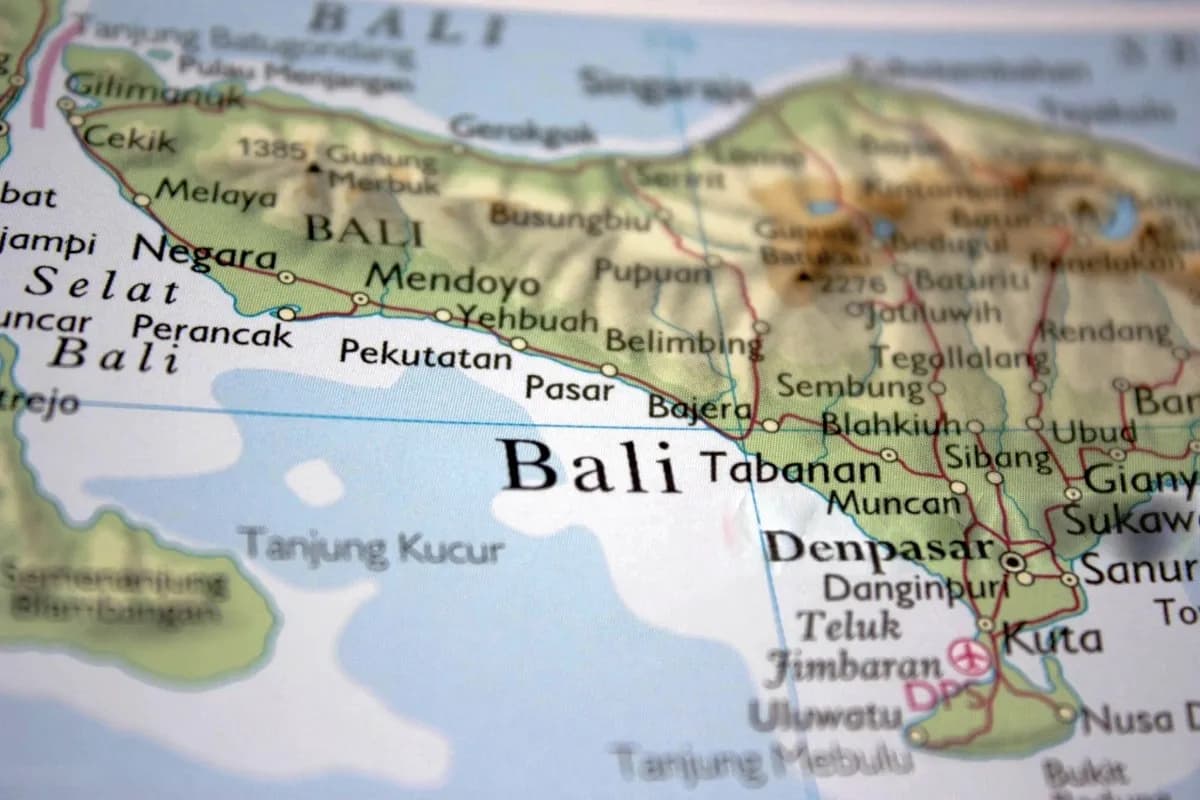
Bali is far bigger and more layered than most people expect, and getting a feel for the map makes all the difference in how you experience it. This isn’t some remote island with a single road running through it; it’s a destination that has grown into a sprawling mix of regions, each with its own rhythm and charm.
Below, we’ll walk you through a guide to the island’s locations, including south, central, east, north, and west, along with the unique charm and offerings of each area, so you can find the experience that fits exactly what you’re looking for.
Why Bali Feels Much Bigger Than It Looks On A Map
Open a map app on your phone and zoom into Bali, and you’ll see a tiny island tucked between Indonesia’s much larger landmasses. But the moment you actually land here, the feeling flips completely; the island suddenly feels massive, almost too big to fully explore in a short trip.
Compared to Indonesia’s other islands, Bali is genuinely on the smaller side. That doesn’t mean it’s actually small though; in reality, Bali is bigger than Singapore. Part of the illusion comes down to how map projections work.
Standard map projections tend to stretch landmasses near the poles far beyond their true size, which makes islands closer to the equator, like Bali, look smaller by comparison than they really are.
Beyond the map trick, there are plenty of real reasons Bali feels bigger once you’re actually here. Roads twist and turn constantly, the terrain shifts from flat coastline to steep hills without warning, and traffic can be wildly unpredictable, all of which stretch travel times far beyond what the distance suggests.
Bali is also split into several distinct regions, each with its own atmosphere and lineup of things to do. What looks like a short hop between areas often turns into a much longer journey once you factor in the winding roads and scenery that’s simply too good to drive past.
How Far Things Actually Are Between Regions
In Bali, the distances you see on a map often don’t match what you’ll actually experience on the road. Take the busy southern areas like Seminyak, Canggu, or Sanur; they might look close together, but traffic during peak hours can turn a short hop between them into a much longer ride than you’d expect.
The further you go from the south, the more that gap in travel time stretches. A trip to the central area around Ubud usually takes more than an hour, while heading to East Bali can take twice as long because of winding roads and tougher driving conditions.
North Bali tests travelers’ patience the most. Surrounded by mountains with narrow, winding roads, the journey there always feels longer than what the map suggests.
Bali’s Main Regions at a Glance
Bali is made up of five distinct regions: south, central, east, north, and west, and each one brings its own personality to the table. Here’s Bali’s regions explained, a closer look at what makes each area worth exploring before you decide where to base yourself.
South Bali
South Bali is the island’s busiest tourism hub, known for its mix of black and white sand beaches and vibrant nightlife. It’s also the region travelers search for most, with Kuta, Seminyak, and Canggu offering an energetic, modern vibe, while Sanur and Jimbaran feel quieter and more family-friendly.
Rounding out the south are Nusa Dua and Uluwatu, known for their luxury resorts and dramatic clifftop views. Whether you’re after buzzing nightlife or a slower pace, South Bali has both within easy reach of each other.
Central Bali
If culture, spirituality, and lush mountain scenery are what you’re looking for, Central Bali brings it all together. It’s known for its rice terraces, tropical forests, and a noticeably calmer pace than what you’ll find in the south.
Here you can experience the cultural heart of the island firsthand, from the rice terraces and sacred forests of Ubud to the sweeping highland views of Kintamani, plus the cool mountain air, botanical gardens, and fruit-picking farms around Bedugul.
East Bali
East Bali is the one region that brings both major draws together, mountains and coastline, where South and Central Bali each only offer one or the other. It’s rich in history and natural adventure, starting with trekking up Mount Agung, the island’s tallest and most commanding peak.
You can also experience spiritual tourism at Pura Besakih, known as the mother temple, explore the exotic charm of traditional Sidemen village, and end at Amed’s striking black sand beaches, where a stunning underwater world awaits for diving and snorkeling.
North Bali
North Bali is another one of the island’s quieter sides, known for its beautiful, dramatic natural scenery. You’ll find exotic coastal views, soothing hot springs, and dozens of hidden waterfalls just waiting to be discovered.
One of the region’s most well-known spots is Lovina Beach, famous for its morning dolphin-watching tours and as a great spot for snorkeling and diving among its coral reefs and rich marine life. You can also get closer to the local community and culture with a visit to Pemuteran, a traditional village known for its own conservation efforts.
West Bali
West Bali is the region closest to Java, best known for West Bali National Park, a protected forest that’s home to the endangered Bali starling, locally known as jalak Bali. The area is also known for its underwater beauty around Menjangan Island, along with the surf breaks at Medewi.
Beyond its natural side, West Bali also brings a distinct cultural flavor, with jegog performances, a type of gamelan music played entirely on giant bamboo instruments that produce a deep, booming bass sound. You can also visit traditional villages in Jembrana known for keeping traditions like makepung, or buffalo racing, alive, all set against a quiet, untouched coastline.
The Offshore Islands
Beyond the mainland, Bali is also surrounded by several smaller islands, including Nusa Penida, Nusa Lembongan, Nusa Ceningan, Menjangan, and Serangan. These islands offer a wide range of charm, from underwater adventures and turtle conservation sites to dramatic limestone cliffs, all worth exploring during your visit.
Choosing Your Base: Matching Regions to How You Travel
Because Bali is divided into several regions, each with its own distinct appeal, many travelers end up wondering which side of Bali is the best. The truth is, every area earns that title; it just depends on your travel style, whether you’re going solo, as a couple, in a small group, or with kids in tow. Here’s a guide to help you find the base area that matches how you travel.
Couples and Honeymooners
Honestly, every part of Bali works well for couples or a honeymoon; it all comes down to picking the spot that matches what you’re after. When it comes to where to stay in Bali as a couple, Central Bali (Ubud) is hard to beat for a romantic, private escape surrounded by nature. South Bali is the other strong pick if beaches, sunsets, and resort-level luxury are more your vibe.
Solo Travelers
Solo travelers can honestly find something that fits almost anywhere in Bali; it really comes down to your own style, whether you’re after peace, community and a social scene, or straight-up adventure.
If you want something easy, South and Central Bali are your best bet, packed with coworking spaces, yoga studios, and social cafes that make it easy to cross paths with other travelers. But if you’re chasing something more challenging, East Bali offers mountain trekking up Gunung Agung, while the offshore islands and North Bali are better suited for rugged, remote adventures away from the crowds.
Small Groups and Friends
Just like solo travel, a group trip with friends can be shaped around whatever experience you’re after, whether that’s relaxation and quality time together, or a shared adventure.
If you want something easy, a laid-back trip focused on unwinding and quality time, Central Bali or South Bali have you covered. Both regions offer plenty of villas built for larger groups, along with a wide range of exciting, beautiful spots to explore nearby.
But if you’re chasing something more adventurous, like exploring underwater scenery or trekking up a mountain, it’s worth looking beyond those two regions.
Families With Children
When it comes to a family trip with kids, comfort and ease are always the top priorities. South Bali and Central Bali are the top picks for this style of travel. South Bali offers calmer beach areas, walkable stretches, and resorts built with kids in mind, while Central Bali is better suited for gentle cultural experiences and cooler mountain air.
The Ultimate Tradeoff: Choosing Between Two Popular Areas
If you’re visiting this tropical island on a tight schedule, seeing everything it has to offer is simply not realistic. The best way to still get a full experience without covering every corner is to choose between two areas that offer opposite experiences, and here are a few popular tradeoffs to help you decide.
- South Bali vs Central Bali: Both are the island’s most popular regions, yet they offer opposite experiences. Staying in South Bali gives you easy access to beaches, beach clubs, and nightlife, while Central Bali offers a calmer atmosphere with rice terraces, a spiritual vibe, and a closer connection to nature. You can still explore both in one trip through a day trip, for example from Canggu or Seminyak to Ubud, which takes about an hour.
- South Bali vs West Bali: These two regions also offer very different characters. South Bali wins if you want comfort, easy access to amenities, and a more modern vibe, while West Bali offers a quieter experience, untouched nature, and authentic local culture. Since the two are quite far apart, it’s realistic to only visit one in a single day, making West Bali a better fit as a separate destination rather than a quick day trip.
- Central Bali vs East Bali: Central Bali takes the lead if you want comfort, with easy access to restaurants, culture, and nature nearby. East Bali is worth adding to your bucket list if you’re after a more remote, untouched landscape. If you want to combine both, plan for a trip longer than three days so you have enough time to enjoy each side properly.
- South Bali vs North Bali: South Bali wins if you’re after energy and easy access, while North Bali takes it if you’re chasing tranquility, hidden waterfalls, and a peaceful atmosphere. Since the distance between the two is considerable, North Bali works best as its own multi-day stop rather than a quick stopover.
- South Bali vs Offshore Islands: South Bali wins on comfort and accessibility, while offshore islands like Nusa Penida and Nusa Lembongan offer a more remote setting, more dramatic scenery, and incredible snorkeling spots. Since getting there requires a boat crossing, the offshore islands.
How to Split Your Stay Across Multiple Bases Without Wasting Days in Traffic
If you’re planning to stay in multiple locations, here’s what to keep in mind to avoid losing time to traffic and keep your trip running smoothly.
- Group regions that are close together and move in one direction, for example from South Bali to Central Bali, instead of backtracking
- Switch bases in the morning on a weekday to avoid weekend traffic and the late afternoon rush
- Stay 2-3 nights per base so you’re not packing and unpacking too often
- Treat far-off regions like North Bali, East Bali, or the smaller islands as their own dedicated leg rather than a quick day trip
- Build in a buffer day around long transfers to keep the trip feeling relaxed instead of rushed
Let the Map Shape a Bali Trip That Feels Like Yours
Bali is an incredibly diverse island, with every area bringing its own kind of charm, which makes it genuinely hard to pin down what is the nicest town in Bali since each one shines in its own way. The real key to experiencing that charm is matching the area with your travel style and the kind of experience you’re after.
Want to dive deeper into Bali’s different regions and what makes each one special? Check out The Wonderspace for more insights into the island.